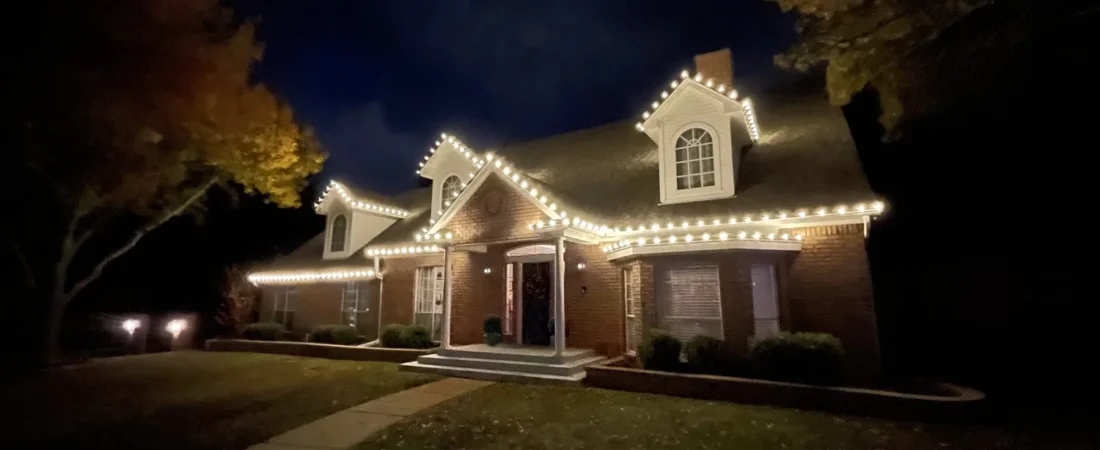
Every new Christmas light installer asks the same eight questions. How does a job actually flow? What does it cost to start? What do I do when the phone rings? How many guys do I need, where do I find them, what paperwork protects me, where do I buy lights, and how do I price a house? This guide answers all eight in plain language, from the way working crews do it.
New to Christmas lights?
List your business free on ChristmasPlug and get a free sample kit, free training and help pricing your first 5 jobs.
List my business freeJoin the free training group- What does the whole process look like, start to finish?
- What are the startup costs?
- A call comes in. What happens next?
- How big should a crew be?
- Where do I find workers, and how do I train them?
- What paperwork protects me?
- Who are the suppliers, what do I need, and how fast can I get it?
- How do I estimate a job and write it up?
1. The process, start to finish (in plain English)
Lead comes in, you call back fast, measure, send a quote with a picture, collect a 50% deposit, order materials, install, get paid the balance, take it down in January, and rebook them for next year.
- A lead comes inWebsite form, phone call, bandit sign, referral or a ChristmasPlug listing.
- Call back within minutesGet the address, what they want lit, and when they want it up.
- Measure the houseUse satellite photos or estimating software, or stop by. Count roofline feet, trees, bushes and wreaths.
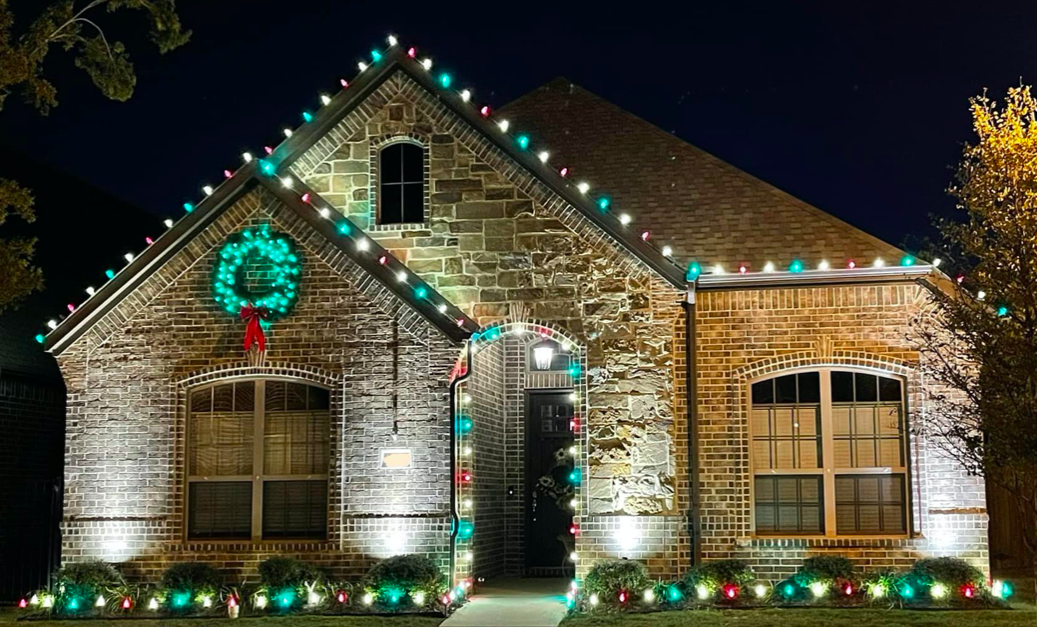
- Send the quote with a mockupShow them their own house lit up. Pictures sell jobs; numbers alone don’t.
- Collect a 50% deposit and a signed agreementNo deposit, no install date. This pays for the materials.
- Order or pull materialsCut and build the light runs for that house before install day.
- Install dayHang, plug in, test every run, set the timer and take photos.
- Collect the balanceWalk the homeowner around at dusk if you can, then get paid the same day.
- Service callsFix a dead bulb or tripped outlet fast. This is what earns next year’s job.
- Takedown in JanuaryLabel each run by house and side, then store it.
- Rebook for next seasonOffer an early-bird price in spring. Returning customers are your cheapest jobs.
2. Startup costs: what you actually need to spend
A lean start runs about $3,000 to $6,000 plus insurance: roughly $1,400 to $1,700 for your first 1,000 feet of commercial lights, plus ladders, safety gear, basic tools and marketing.
You don’t need a warehouse or a bucket truck to start. Most new installers start with a truck or trailer they already own and buy materials job by job, using customer deposits. Here’s a realistic first-season budget. Prices vary by area and supplier, so treat these as ranges.
| Item | Typical range | Notes |
|---|---|---|
| Materials for ~1,000 ft of roofline | $1,400 – $1,700 | C9 socket wire, LED bulbs, clips, zip cord and plugs. Covers about 5 to 10 average homes. |
| Ladders | $400 – $900 | One extension ladder for two-story homes plus a step ladder. |
| Safety gear | $150 – $400 | Harness and roof anchor for steep roofs, gloves, non-slip shoes. |
| Tools | $150 – $300 | Measuring wheel, wire cutters, zip ties, extension cords, outdoor timers. |
| Business setup | $100 – $500 | Depends on your state. For example, an LLC filing in Texas is $300. |
| Marketing | $200 – $1,000 | Yard signs, door hangers and a simple website. Your ChristmasPlug listing is free. |
| Estimating and design software | Varies | Optional, but it saves hours per quote. See question 8. |
| General liability insurance | Get 2–3 quotes | Many homeowners, HOAs and businesses will ask for proof before you climb. |
| Lean first-season total | About $3,000 – $6,000 | Plus insurance |

The math that makes it work: a 1,000-foot starter kit costs about $1.40 to $1.70 per foot. Sold at $7 per foot installed, those same 1,000 feet bring in about $7,000. For the full product list, see this installer product and tool checklist.
3. A call comes in from your website or bandit signs. What happens next?
Call back within minutes, ask five quick questions, measure the same day, and send a quote with a picture of their house lit up. Whoever quotes first usually wins.
In October and November, homeowners call two or three companies and book the first one that sends a clear price. Speed beats price more often than you’d think.
The five questions to ask on every call
- What’s the address? You can pull it up on a satellite map while you talk.
- What do you want lit? Roofline only, or trees, bushes, wreaths and the walkway too?
- What colors? Warm white is the most requested. Multi-color and patterns are common for families with kids.
- When do you want it up? Before Thanksgiving fills first, so book those dates early.
- Is there an HOA or anything I should know? Gates, dogs, steep roofs, gutter guards.
Then follow up like a pro
- Send the quote the same day, with a mockup photo.
- If you don’t hear back, text after 24 hours, then call after 3 days.
- Make it easy to say yes: send a deposit link and two install date options.
Before you put out bandit signs, check your city’s rules. Many cities ban signs in the right-of-way and fine the business named on the sign.
4. How big should a crew be? 2 or 3 people?
Two people for most homes: one on the ladder or roof, one on the ground. Add a third for large two-story homes, lots of trees, or commercial jobs.

- Standard for one-story and most two-story homes
- Climber plus ground person
- Never send someone up a ladder alone
- Big homes, tall trees, or several houses in one day
- Commercial buildings and storefronts
- One person can wrap trees and bushes while the others do the roof
Many owners start as the climber on a 2-person crew, then step off the ladder to sell and estimate once they hire a lead installer.
5. Where do you find workers, and how do you train them?
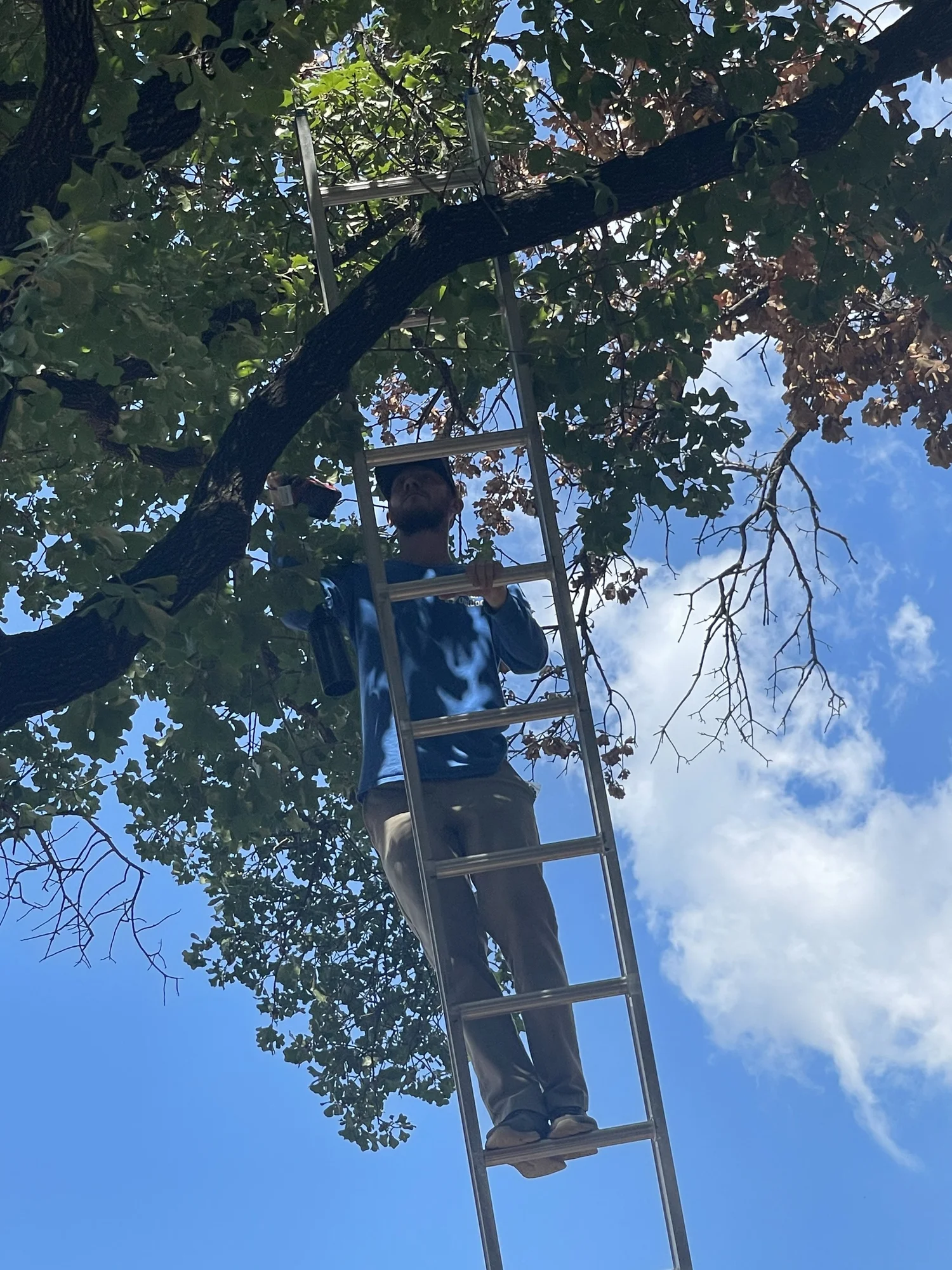
Hire people who already work outside and aren’t afraid of heights: landscapers, roofers, gutter and painting crews, and college students on break. Train them on the ground first, then pair them with an experienced climber.
Where to find them
- Landscape and lawn crews. Their work slows down right when lights pick up.
- Roofers, gutter cleaners and painters. Already comfortable on ladders.
- Referrals from your current guys. Pay a small bonus after the new hire finishes the season.
- Local job boards and Facebook groups. Post the pay, the dates and “must be comfortable on ladders.”
A simple training plan
- Day 1, on the ground: ladder setup and safety, plugs and cords, how the light runs are built.
- Days 2–3, shadow a climber: clipping, spacing, corners and peaks.
- Week 1, trees and bushes while you watch.
- After that, climb: they go up only when you trust their ladder habits.
- Every job, a checklist: test every run, take photos, set the timer, clean up.
Want help? Our free training group covers installs, pricing and hiring, and you can ask installers who’ve done it for years.
6. CYA: what paperwork do you need?
For homeowners: a signed service agreement and proof of insurance. For workers: hiring paperwork, a signed safety sign-off, and the right coverage for injuries. Have a local attorney and insurance agent review your forms.
- Service agreement: what you’ll install, price, 50% deposit, balance due date, install and takedown dates
- Who owns the lights: most pros lease the lights and keep ownership. Say so in writing.
- Damage terms: how you handle gutters, shingles and landscaping, and existing damage you note before starting
- Access: gates, pets, outlets, and permission to come back for service and takedown
- Cancellation and weather delays
- Photo permission so you can use their house in marketing
- Hiring paperwork: an application and federal forms. Employees fill out a W-4 and I-9; independent contractors a W-9.
- Employee or contractor? Ask a CPA. Misclassifying workers gets expensive.
- Safety sign-off: they confirm they were trained on ladders and fall protection
- Injury coverage: workers’ comp, or whatever your state allows instead
- Vehicle: commercial auto if workers drive for the business
This is general information, not legal advice. Rules vary by state. A one-hour attorney review of your agreement and a call with an insurance agent are worth it before your first season.
7. Working with suppliers: what to buy, what it costs, and how fast you get it
Buy commercial-grade lights wholesale. Order the day a deposit clears, and keep the basics (warm white C9 bulbs, socket wire and clips) in stock so you’re never waiting on a shipment in November.

What you need for a typical roofline job
- C9 socket wire, cut to fit (usually 12″ or 15″ spacing)
- LED C9 bulbs. Warm white is the most popular.
- Clips for gutters, shingles and ridges
- SPT-1 zip cord with male and female plugs to build leads and jumpers
- Outdoor timers or photocells, and extension cords
- Upsells: mini lights for trees and bushes, wreaths, garland and bows
What it costs
Expect roughly $1.40 to $1.70 per foot in materials for a C9 roofline when you buy in kit quantities. Leased lights come back down in January and get reused next season, so year two is mostly profit on those feet.
Turnaround after the 50% deposit
- Order the same day the deposit clears, and confirm stock and ship dates with your supplier before you promise an install date.
- Stock up in September. Popular colors and clips get tight in November.
- Keep a starter inventory so you can hang the first jobs while bigger orders ship.
Grants Outdoor sells wholesale Christmas lights, socket wire and clips for installers.
8. How do you estimate jobs and write them up?
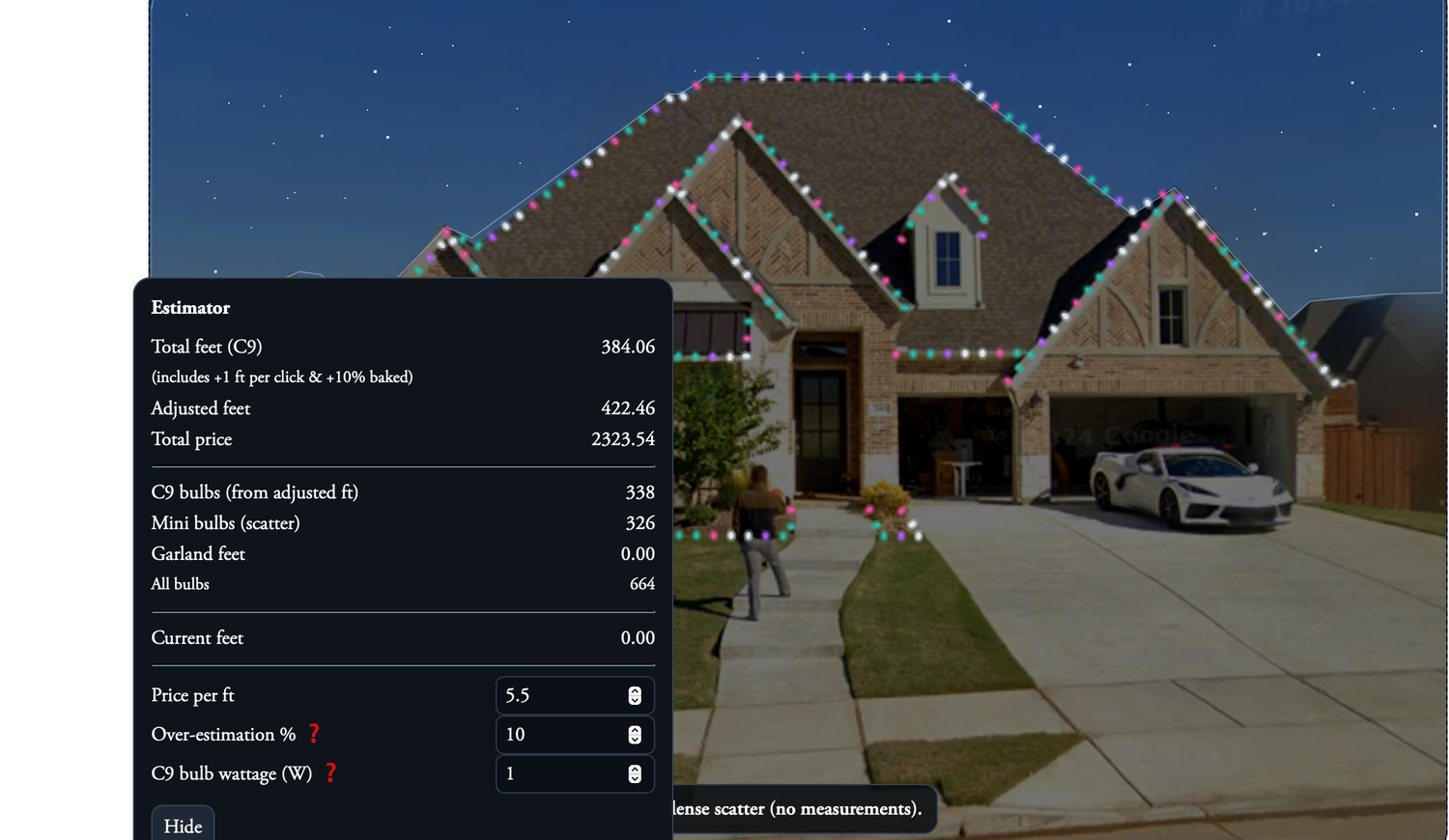
Measure the roofline in feet, multiply by your price per foot, add trees, wreaths and extras, apply your job minimum, and send a written quote with a mockup photo and the deposit terms.
Step by step
- Measure the roofline. Use a satellite view, estimating software, or a measuring wheel on site. Count each section and peak.
- Price per foot. Many installers charge around $7 per foot for C9 rooflines. Charge more for two-story or steep roofs.
- Add the extras. Trees priced by height and wraps, bushes, wreaths, garland, ground lighting.
- Set a job minimum so small houses are still worth the drive.
- Say what’s included: lights, install, service calls, takedown and storage.
A quick example
| Line item | Math | Price |
|---|---|---|
| Warm white C9 roofline | 180 ft × $7 | $1,260 |
| Materials cost | 180 ft × about $1.55 | about $279 |
| Left for labor and profit | about $981 |
This assumes a 2-person crew finishes it in a few hours. Next year, the same leased lights go back up with almost no material cost.
What goes in the written quote
- A mockup photo of their house with the lights on
- Line items, the total, and the 50% deposit amount
- Install window and takedown month
- What’s included: service calls, takedown, storage
- An expiration date: “Price good for 7 days.” It creates urgency in peak season.
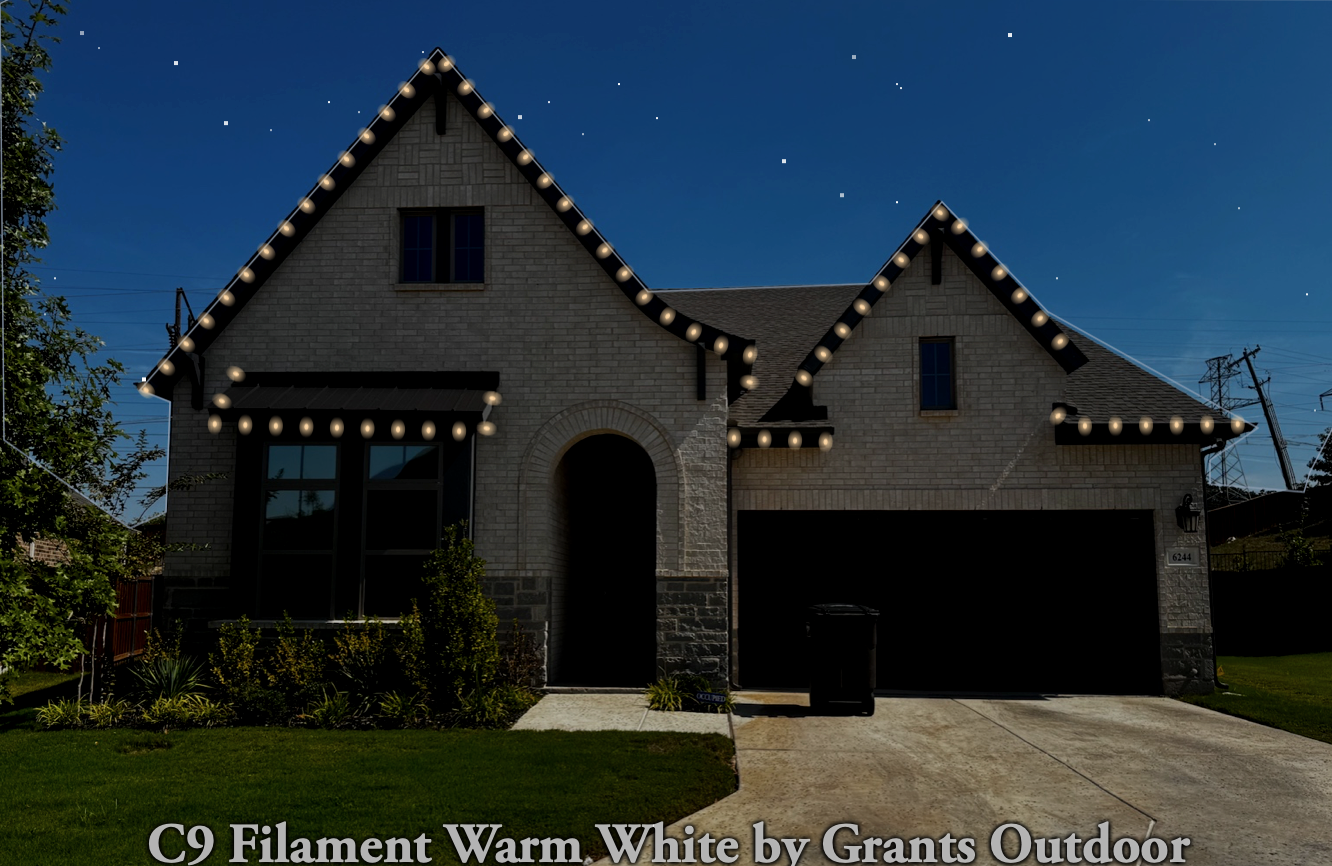
Save hours on every quote: Grants Pro Estimator measures the roofline from a photo, builds the mockup and writes up the quote in one place. ChristmasPlug installers get 50% off with code ChristmasPlug.
Watch: estimating a job
Watch on TikTok
Watch on Instagram
🎥 More install tips and how-to videos: TikTok · Instagram · Facebook
Quick answers
What is the process for a Christmas light installation job?
A lead comes in, you call back fast, measure the house, send a quote with a mockup, collect a 50% deposit and signed agreement, order materials, install and test, collect the balance, handle service calls, take the lights down in January, and rebook the customer for next season.
How much does it cost to start a Christmas light business?
A lean start is about $3,000 to $6,000 plus insurance: roughly $1,400 to $1,700 for the first 1,000 feet of commercial C9 materials, plus ladders, safety gear, basic tools, business setup and marketing.
What should I do when a Christmas light lead calls?
Call back within minutes, ask for the address, what they want lit, colors, install timing and any HOA or access issues, then send a quote with a mockup photo the same day and follow up after 24 hours and 3 days.
How many people do you need on a Christmas light crew?
Two people handle most homes: one climber and one ground person. Add a third for large two-story homes, many trees, or commercial jobs. Never send someone up a ladder alone.
Where do Christmas light companies find workers?
Landscape and lawn crews, roofers, gutter cleaners, painters, college students on break, and referrals from current workers. Train new hires on the ground first, then pair them with an experienced climber.
What paperwork does a Christmas light installer need?
A signed service agreement with homeowners covering scope, price, deposit, dates, light ownership and damage terms; proof of general liability insurance; and hiring paperwork, a safety sign-off and injury coverage for workers. Have a local attorney and insurance agent review your forms.
How much do Christmas light materials cost per foot?
Commercial C9 roofline materials bought in kit quantities run roughly $1.40 to $1.70 per foot. Many installers charge around $7 per foot installed.
How do you estimate a Christmas light job?
Measure the roofline in feet, multiply by your price per foot, add trees, wreaths and extras, apply your job minimum, and send a written quote with a mockup photo, the 50% deposit amount, dates and what's included.
Get your first season off the ground
List your business free so homeowners near you can find you. New installers get a free sample kit and help pricing their first 5 jobs.
List my business freeJoin the free training group
Keep reading: How to start a Christmas light business · Christmas light marketing for installers · What homeowners pay for Christmas light installation

Author: camerongrant@grantsoutdoor.com
Self taught developer and seo specialist