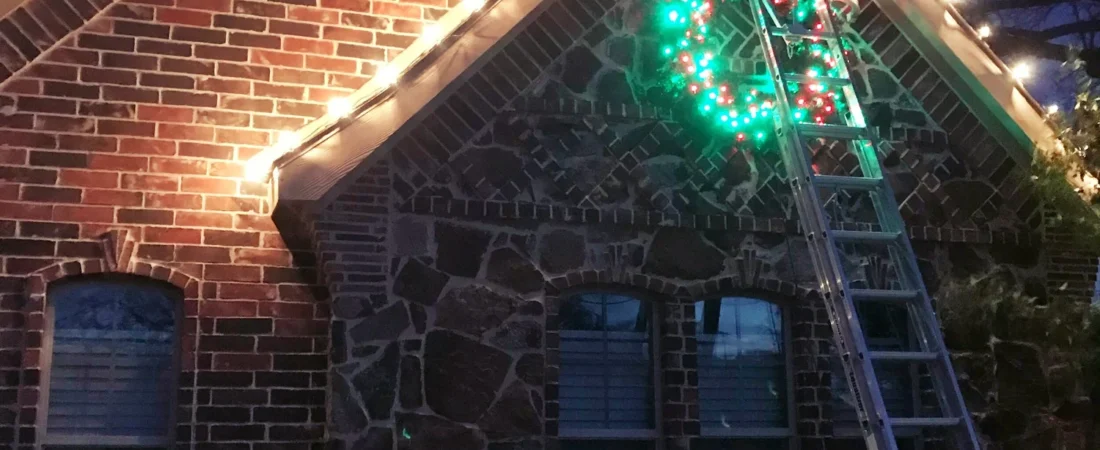
Knowing how to hang lights on one house is half the job. The other half is running 3, 4 or 5 houses a day for six straight weeks without forgetting a timer, running out of clips, or showing up at the wrong address. This guide covers the operations side of Christmas light installation: scheduling, routing, loading the truck, running the crew, weather calls, and a takedown system that sets up next season.
- How many installs can one crew do?
- Build your install schedule by neighborhood
- One bin per house: the job kit system
- Truck and trailer loadout checklist
- Crew roles and the morning huddle
- Weather calls: when to go and when to reschedule
- Customer texts that prevent callbacks
- End-of-day reset
- Takedown route and labeling system
- FAQ

1. How many installs can one crew do in a day?
A 2-person crew can usually finish 2 to 4 average residential roofline jobs a day. Large homes, heavy tree wrapping and commercial work can take a full day or more.
Your real number depends on drive time, roof height and how much is pre-built before you arrive. Track your own times in your first week, then schedule off your numbers, not your hopes.
| Job type | Typical crew time (2 people) | Schedule it as |
|---|---|---|
| One-story roofline | 1.5 – 3 hours | Quarter to half day |
| Two-story roofline | 3 – 5 hours | Half day |
| Roofline plus trees and bushes | 4 – 8 hours | Half to full day |
| Large tree wraps or commercial | 1 day or more | Full day, add a third person or a lift |
These are planning ranges, not promises. Pre-built light runs, experience and access all change them.
2. Build your install schedule by neighborhood
Group jobs by area so the crew drives once and installs many times. Fill each day with one big job or two to four small ones in the same part of town.
- Zone your service area into 4 to 6 zones and give each zone set install days.
- Offer customers dates in their zone first. “We’re in your neighborhood Tuesday or Thursday” closes faster than an open calendar.
- Front-load the big jobs in early November when the weather is better and the days are longer.
- Keep one open slot a week for reinstalls, weather makeups and last-minute upsells.
- Put the farthest job first and work your way back toward the shop.

3. One bin per house: the job kit system
Pre-build every house’s lights into its own labeled bin before install day. The crew grabs the bin, hangs the runs and moves on.
Use clear plastic bins with the customer’s name and address on two sides. Inside each bin:
- Every light run, labeled by side of the house (Front left, Garage, Back)
- Extension leads and jumpers, already cut to length
- Exact clip count plus 10% extra
- Timer or photocell for that house
- Wreath, garland or bows if sold
- A printed copy of the design or mockup
- Notes: outlet locations, gate code, dog, HOA rules
After the season, the same bin becomes that customer’s storage bin. Next year’s install starts with grabbing their bin.
4. Truck and trailer loadout checklist
Load the night before from a written list. Forgetting one item, like a ladder leveler or a spare timer, can cost a whole job.
- Job bins for today, in route order
- Extension ladders and a multi-position ladder
- Ladder standoffs and levelers
- Spare socket wire, bulbs, clips and plugs
- Spare timers and outdoor extension cords
- Cutters, zip ties, tape, voltage tester
- Fall protection for steep roofs
- Phone charger and a battery power source
- Spare GFCI-protected outdoor cord
- Rain gear and gloves
- Headlamps for late finishes
- Trash bags. Leave the yard cleaner than you found it.
- Door hangers for the neighbors
- Yard sign, if the customer allows it
- First-aid kit

For the tools themselves, see the top 5 productivity tools for installers.
5. Crew roles and the morning huddle
Give every person one job. A climber, a ground lead, and on bigger jobs a tree and bush person. Then spend 5 minutes on the plan before the first ladder goes up.
| Role | Owns |
|---|---|
| Crew lead (often the climber) | Safety calls, roof work, final walk-around, customer handoff |
| Ground lead | Ladder footing, feeding wire, power and timers, cleanup |
| Third person (big jobs) | Trees, bushes, wreaths and ground lighting |
The 5-minute morning huddle
- Today’s route and which bin goes with which stop
- Any steep roofs, wet surfaces or power lines on today’s list
- Who has what role at each stop
- Finish time for each stop
6. Weather calls: when to go and when to reschedule
Decide the night before and tell customers early. Wet roofs, frost, high wind and lightning are the common reasons to move a job.
- Rain or frost on the roof: move roof work. Ground work (trees, bushes) may still be possible.
- High wind: ladders and long runs of wire become hard to control. Reschedule roof work.
- Lightning: everyone off ladders and roofs.
- Cold but dry: usually workable with the right gloves and footwear.
Always follow the ladder and equipment manufacturer’s limits and any safety rules that apply to your crew. Keep one makeup day a week so a rainy Tuesday doesn’t wreck the whole month.
7. Customer texts that prevent callbacks
Three short texts: the day before, when you arrive, and when you’re done. Most “why aren’t my lights on” calls are prevented by the last one.
- Day before: “We’re scheduled tomorrow between 9 and 12. Please unlock the side gate and keep pets inside.”
- On arrival: “We’re here and starting now.”
- When done: send 2 or 3 photos and say when the timer turns on and off, which outlet it’s on, and how to reach you for service.
Ask for a review in the same message while they’re excited. Reviews sell next year’s jobs.
8. End-of-day reset
- Restock spare bulbs, clips, plugs and timers on the truck
- Mark finished jobs complete and send the balance invoices
- Log actual hours per job to sharpen your next estimates
- Upload finished photos for marketing
- Load tomorrow’s bins in route order
9. Takedown route and labeling system
Schedule takedowns by zone in early January, label every run as it comes down, and put it back in that customer’s bin. Next year’s install starts the day you take this year’s down.
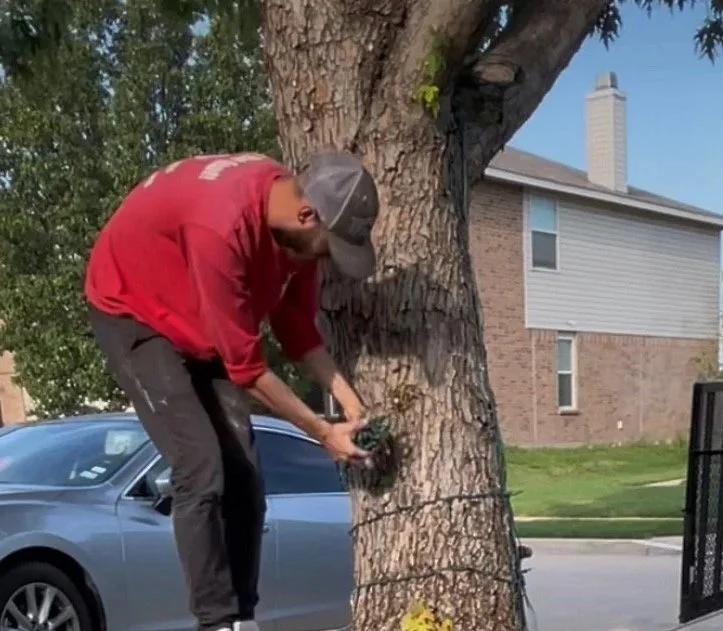
- Tell customers their takedown window when they book, and remind them in late December.
- Takedowns are faster than installs, so you can stack more of them per day in the same zone.
- Label each run with tape before it comes off: customer, side of house, run number.
- Test, don’t trust: plug each run in at the shop. Replace dead bulbs before storage, not next November.
- Count inventory at the end of takedowns, then order next season’s materials early.
- Rebook while you’re there. Offer an early-bird rate to customers who sign up for next season before spring.
Get more jobs on your route
List your business free on ChristmasPlug so homeowners in your zones can find you. New installers get a free sample kit and help pricing their first 5 jobs.
List my business freeJoin the free training groupWatch: organizing and repair kits
Watch on Instagram
Watch on Instagram
🎥 More install tips and how-to videos: TikTok · Instagram · Facebook
FAQ
How many Christmas light installs can a crew do in a day?
A 2-person crew can usually finish 2 to 4 average residential roofline jobs a day. Large homes, heavy tree wrapping and commercial jobs can take a full day or more.
How should Christmas light installers schedule jobs?
Group jobs by neighborhood into zones with set install days, put the biggest jobs early in November, start with the farthest job, and keep one open slot each week for weather makeups.
What should be on the truck for a Christmas light install?
Job bins in route order, extension and multi-position ladders with standoffs and levelers, spare wire, bulbs, clips, plugs and timers, cutters, a voltage tester, fall protection, rain gear and trash bags.
When should Christmas light installs be rescheduled for weather?
Move roof work when roofs are wet or frosty, in high wind, or when there is lightning. Ground work on trees and bushes may still be possible. Follow ladder and equipment manufacturer limits.
When do Christmas light companies take lights down?
Most schedule takedowns by neighborhood in early January, label each run as it comes down, test it at the shop and store it in that customer's bin for next season.
Keep reading: 8 questions every new installer asks · Christmas light tool kit: what to buy first · Grants Pro Estimator (50% off with code ChristmasPlug)

Author: camerongrant@grantsoutdoor.com
Self taught developer and seo specialist