Every tool list says “you need all of this.” You don’t, at least not in your first season. This guide puts Christmas light installation tools in buying order: what you need before your first job, what to add once the jobs are rolling, what to rent instead of buy, and how to take care of it all so it lasts.

Stage 1: Before your first job
Buy only what keeps you safe and gets a one- or two-story roofline done: ladders, fall protection for steep roofs, cutters, a voltage tester, and your first spool of lights.
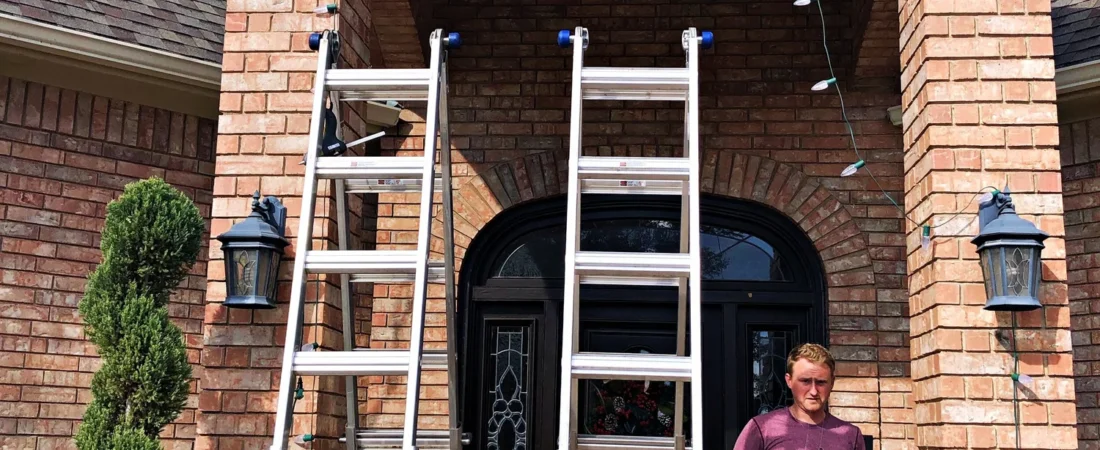
- Extension ladder tall enough for the two-story homes you’ll quote
- Multi-position ladder for entries, porches and bushes
- Ladder standoff and leg levelers
- Fall protection gear rated for roof work
- Good wire cutters or snips
- Non-contact voltage tester
- Measuring wheel, or estimating software to measure from a photo
- Starter materials: socket wire, C9 bulbs, clips, zip cord and plugs
- Outdoor timers and outdoor-rated extension cords
- Clear storage bins and a label maker or tape
That’s enough to do good work on most homes. Don’t buy a lift, a trailer or a warehouse until the jobs force you to.
Stage 2: Once you have steady jobs
Add the tools that save time on every job: roof traction gear, a spool holder, a portable power source, a load meter, and a tool vest for each climber.
- Roof traction footwear or roof hooks for steep and metal roofs
- 1,000-foot spool holder or dispenser
- Portable battery power source to test runs on the roof
- Plug-in load meter for bigger displays
- Multimeter for troubleshooting dead runs
- Tool vests or belts so climbers stop going back down the ladder
- Stackable toolboxes and truck shelving
- Cold and wet-weather gear for the whole crew
- Estimating and design software to quote faster

Stage 3: Running multiple crews
Now you buy duplicates and systems: a full truck kit for every crew, a shop to build and store lights, and software to track jobs, crews and inventory.
- A complete, identical truck kit for each crew
- Shop or storage space with labeled shelving by customer
- Enclosed trailer for materials and ladders
- Job management software for scheduling and invoicing
- Spare-parts kit per truck: bulbs, plugs, timers, clips
- Uniforms and truck signage. They sell jobs while you’re parked.
Tools by job type
Match the tools to the job you sold. A one-story roofline needs a fraction of the gear a commercial tree job does.
| Job | Must-have tools | Nice to have |
|---|---|---|
| One-story roofline | Extension ladder, cutters, clips, voltage tester | Multi-position ladder |
| Two-story or steep roof | Tall extension ladder with standoff and levelers, fall protection, roof traction gear | Roof hooks or pitch platforms |
| Tree and bush wrapping | Multi-position or orchard ladder, mini lights, zip ties | Pole tools for high branches |
| Wreaths and garland | Hooks and mounting hardware, extension leads | Pre-lit commercial wreaths |
| Commercial and HOA entrances | Load meter, outdoor-rated power distribution, lift if needed | A third crew member |

Rent or buy?
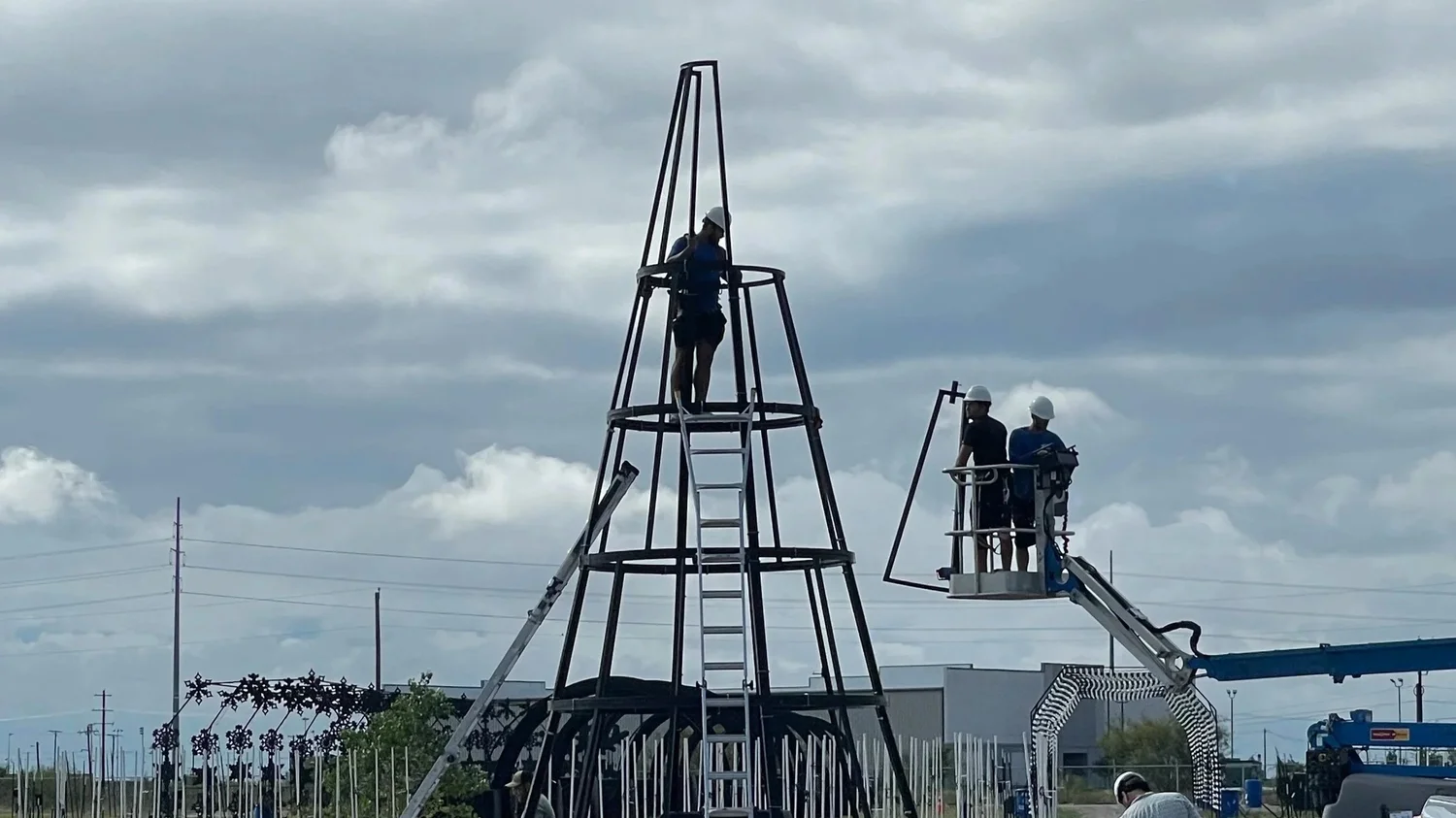
Buy what you use every day. Rent what you need a few times a season, like lifts for big trees and commercial buildings, and build the rental cost into that job’s price.
| Item | Usually | Why |
|---|---|---|
| Ladders, cutters, testers | Buy | Used on every job |
| Socket wire and bulbs | Buy | You lease them to customers and reuse them for years |
| Boom or scissor lift | Rent | Needed only for tall trees and commercial work |
| Trailer | Rent at first | Buy once you’re moving material every day |
| Generator | Rent | Only for jobs without usable outlets |
Make sure anyone operating a lift is trained and the equipment is used the way the rental company and manufacturer require.
The per-person kit
Every crew member should carry their own basics so nobody is waiting on someone else’s cutters.
- Tool vest or belt
- Cutters and a small knife
- Zip ties and a handful of clips
- Gloves and a headlamp
- Non-contact voltage tester
- Rain jacket and a warm layer
- Spare bulbs and plugs
- Phone power bank
- Roof footwear (climbers)
- Fall protection (climbers)
Off-season care and storage
Your lights and tools are your inventory. Clean, test, label and store them in January and they’ll be ready in October.
- Test every run before storage and replace dead bulbs now.
- Store by customer in labeled, clear bins, off the floor and out of the heat.
- Inspect ladders: feet, rungs, locks and standoffs. Retire anything damaged.
- Charge and store batteries the way the manufacturer recommends.
- Count your inventory and reorder before suppliers get busy in the fall.
5 tool-buying mistakes new installers make
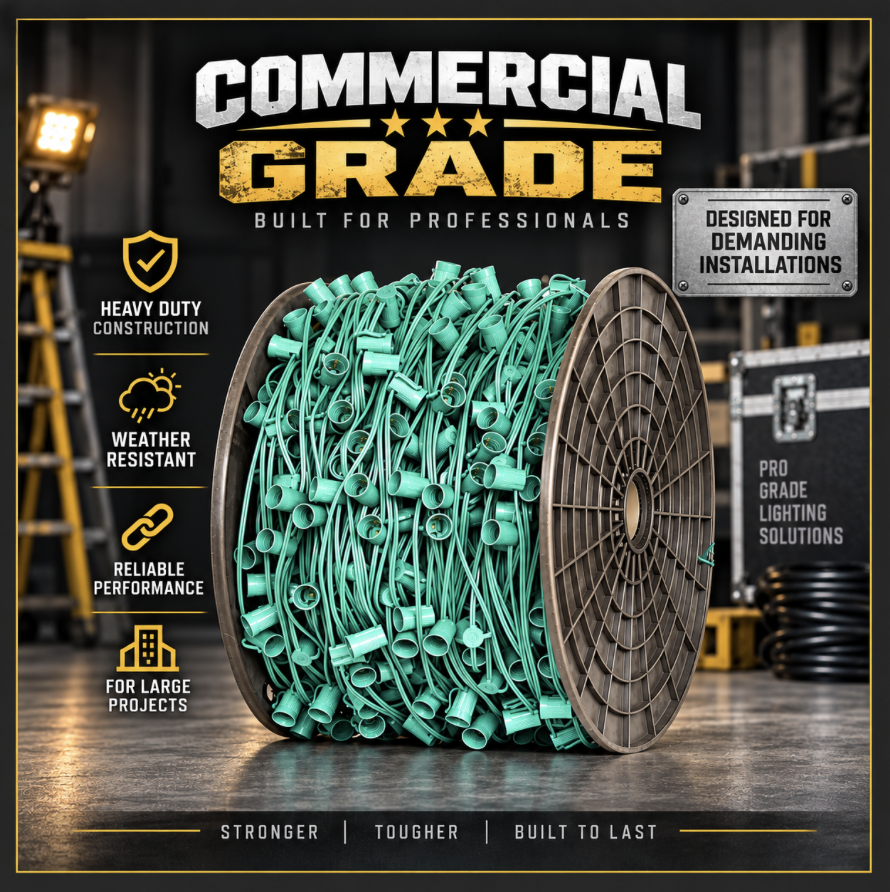
- Buying retail light strings. They fail in weather and don’t fit rooflines. Use commercial socket wire cut to fit.
- One ladder for every house. Two-story homes and entries need different ladders.
- Skipping fall protection to save money. One fall costs more than every tool on this list.
- Buying a lift too early. Rent until you’re using it every week.
- No spares on the truck. A missing timer or a handful of plugs can send you back to the shop.
Stock up at wholesale prices
Commercial C9 bulbs, socket wire and clips for installers. Plus list your business free on ChristmasPlug.
Shop wholesale lightsList my business freeWatch: the orchard ladder in action
Watch on Instagram
🎥 More install tips and how-to videos: TikTok · Instagram · Facebook
FAQ
What tools do I need to start installing Christmas lights?
An extension ladder for two-story homes, a multi-position ladder, a ladder standoff and levelers, fall protection for steep roofs, cutters, a non-contact voltage tester, a measuring method, starter materials, timers and storage bins.
Should Christmas light installers buy or rent a lift?
Rent at first. Buy the tools you use every day, and rent lifts for the few tall-tree or commercial jobs each season, building the rental cost into that job's price.
What should each Christmas light crew member carry?
A tool vest or belt, cutters, zip ties and clips, gloves, a headlamp and a voltage tester, plus rain gear, spare bulbs and plugs, and roof footwear and fall protection for climbers.
How do you store Christmas lights after the season?
Test every run, replace dead bulbs, label it by customer and side of the house, and store it in clear bins off the floor and out of the heat. Count inventory and reorder before fall.
Keep reading: Install day operations: routing, loadout and crew roles · 8 questions every new installer asks

Author: camerongrant@grantsoutdoor.com
Self taught developer and seo specialist