
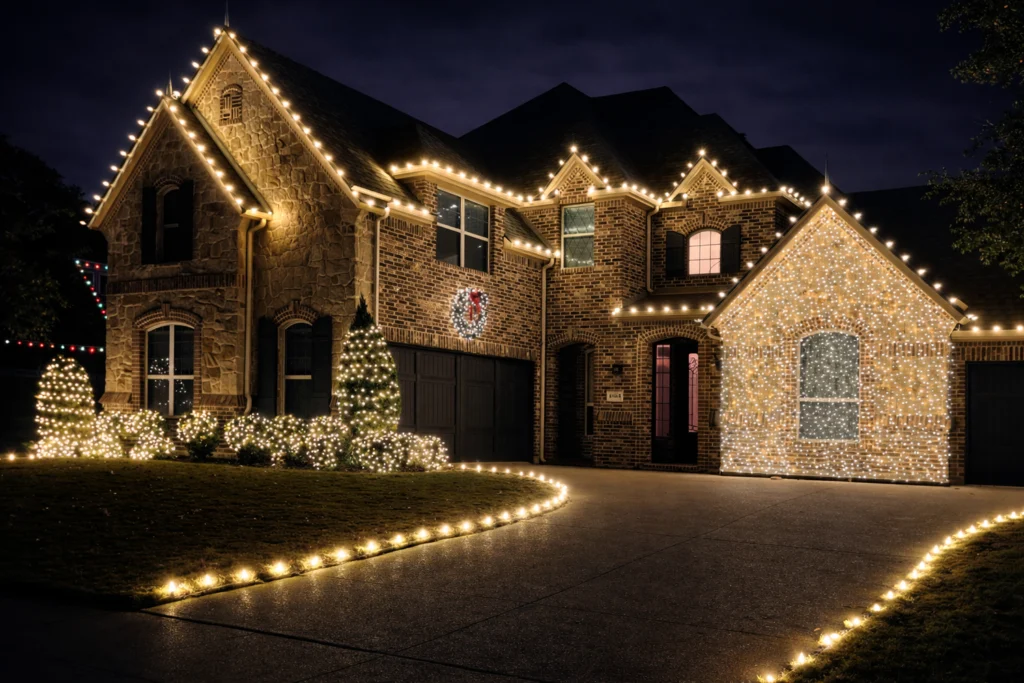
The five tools that save pro Christmas light crews the most time, plus the complete gear list every installation company should carry.
Christmas light season is short and fast. When a crew is trying to finish several houses in one day, tiny inefficiencies stack up quickly: an extra trip to the truck, a dull pair of cutters, a missing plug, a ladder that will not sit level.
The biggest productivity gains rarely come from simply moving faster. They come from carrying the right tools, keeping materials organized, measuring and designing jobs before install day, and cutting out unnecessary trips up and down ladders.
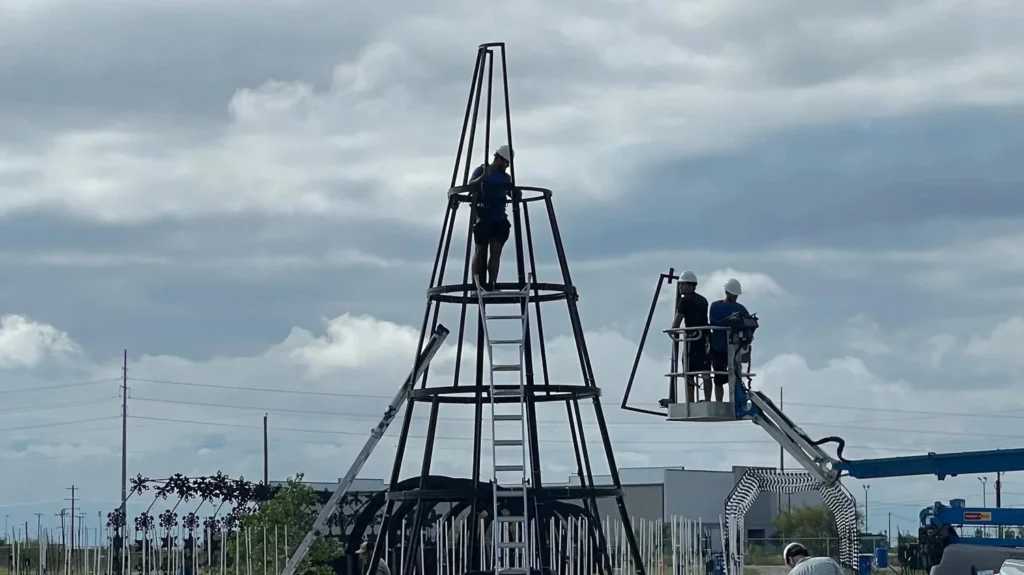
Below are the top 5 Christmas light installation tools for productivity, followed by the rest of the equipment, materials and supplies a professional installer should have on hand. Whether you are figuring out how to start a Christmas light business or you already run crews and want them faster, these are worth a look.
The top 5 productivity tools for Christmas light installers
These are not the only five tools you need. They are the five that make the most noticeable difference in how quickly a crew can plan, prep and install a Christmas light job.
- Cougar Paws boots + GOAT roof hook for roof traction and access
- Christmas light design and estimating software to measure and quote before you arrive
- An extension ladder with a standoff and leg levelers, plus a multi-position ladder
- Crescent snips or wire cutters that stay sharp all season
- A RYOBI 150W 18V portable power source for testing strands anywhere
1. Cougar Paws + GOAT roof hook

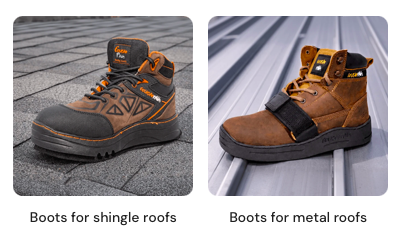
If your crews are on roofs every day, purpose-built roof equipment changes how efficiently they can work.
Cougar Paws roofing boots are made specifically for roof work and use replaceable traction pads. On suitable roofing surfaces and in suitable conditions, footwear designed around roof traction is a big step up from everyday work shoes.
The GOAT roof hook (also called the GOAT steep assist ladder) is another piece worth considering. Depending on the roof and the job, having dedicated roof-access equipment removes a lot of the awkward repositioning that comes from trying to tackle every house the same way.
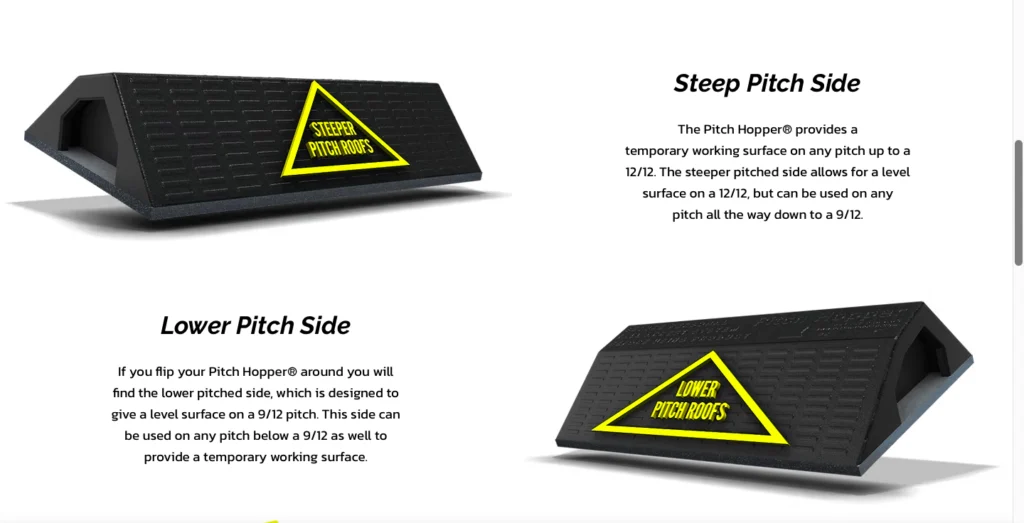
Pitch hoppers are also handy in the right situations, giving installers a stable working platform on steeper pitches.
Do not overlook basic comfort either. Installers spend hours standing and walking. For ground work and other suitable surfaces, comfortable cushioned shoes such as HOKAs make long install days easier, and some confident climbers wear them on lower-pitch roofs too.
Why roof equipment boosts productivity
Roof work is often the slowest part of an install. The goal is not to race across a roof. It is to have the right equipment on the truck so nobody is constantly moving ladders or improvising because the wrong gear came along.
No boot, hook or traction product makes every roof safe. Roofing material, pitch, weather, equipment limits, fall hazards, manufacturer instructions and applicable safety rules all still apply.
Cougar Paws →GOAT roof hook →Pitch Hopper →
2. Christmas light design and estimating software

Some of the biggest time savings on a Christmas light job happen before install day even starts. Instead of showing up at a property and working everything out from scratch, design software built for Christmas light contractors lets you upload a photo of the house and plan the whole install ahead of time.
With a tool like the Christmas Light Estimator, you can:
- Upload a photo of the customer’s home
- Set a known measurement for scale
- Measure rooflines
- Draw Christmas lights directly on the house
- Create straight and curved light runs
- Adjust bulb spacing and look
- Add wreaths, garland and other decor
- Calculate materials
- Set your pricing
- Build the estimate
- Show the customer a visual mockup
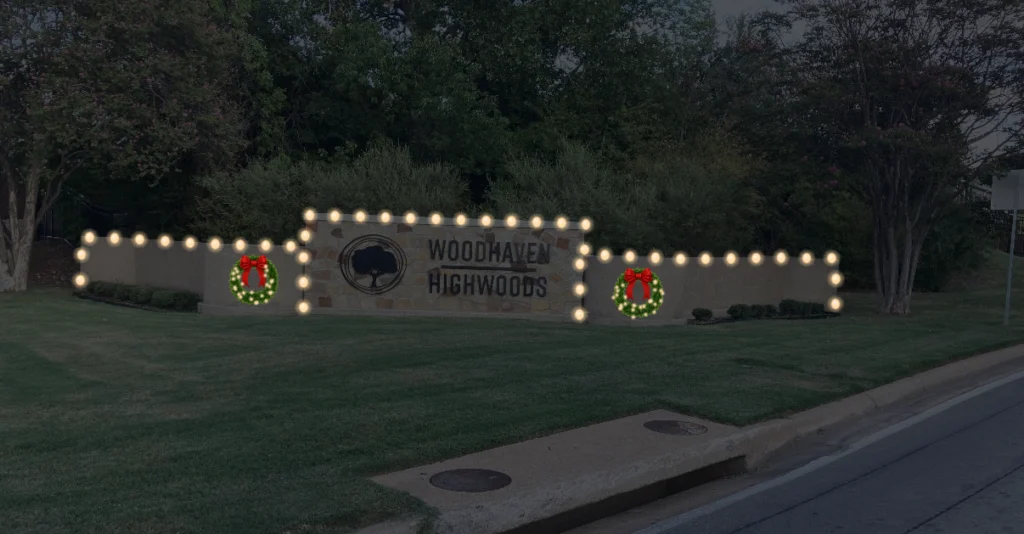
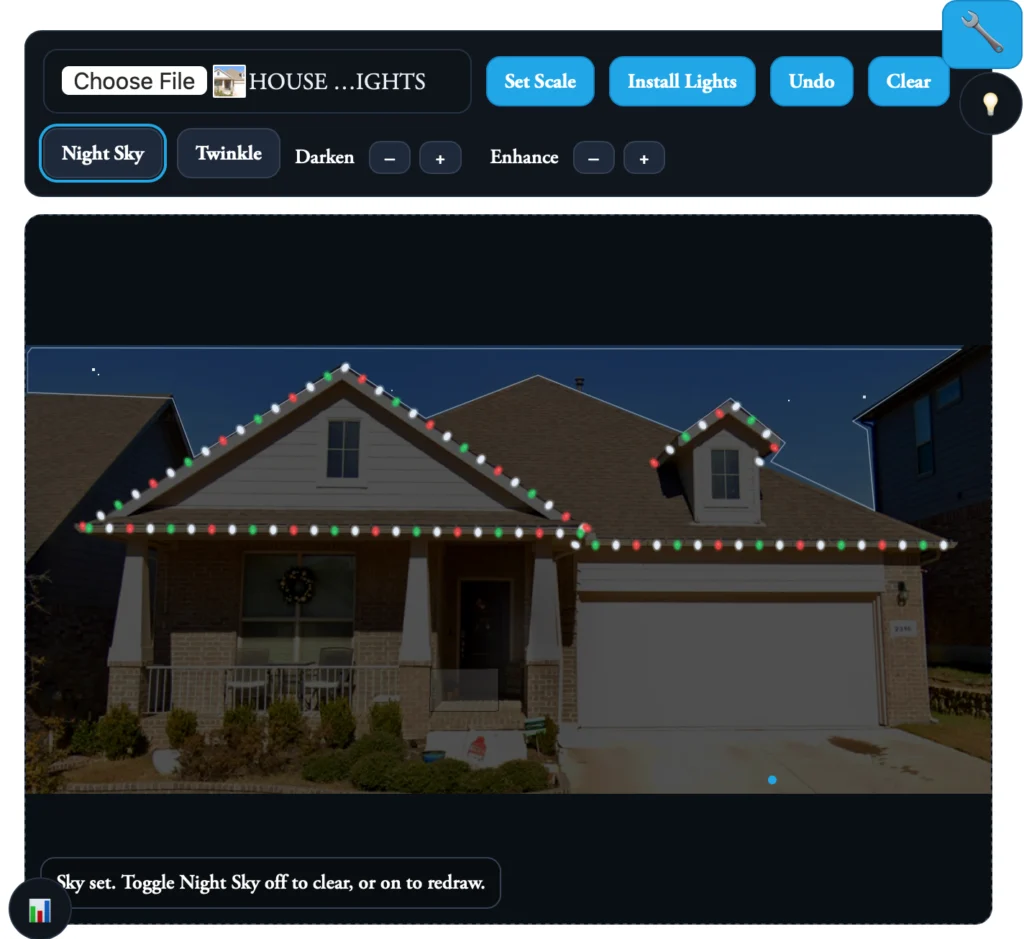
Measure Christmas light jobs from a photo
Once the photo is scaled, you can measure every section you plan to light. That gives you a solid early count of C9 socket wire, bulbs, clips, extension wire, plugs and other supplies before anyone loads the truck.
Design the job before you install it
Most customers struggle to picture what you are describing. A design drawn on a photo of their own house makes the proposal easy to understand, and it forces your team to think through the install before they are standing in the driveway. That is why good Christmas light design software is a productivity tool, not just a sales tool.
Estimating and pricing in one place
After measuring and designing, the same software turns your measurements and materials into a price. The point is to stop bouncing between a photo, a calculator, scribbled notes and a spreadsheet, and keep the Christmas-light-specific estimating steps together. If you are searching for a Christmas light estimator, a holiday lighting design app, a roofline measuring tool or Christmas light business software, this is the category to look at. Compare options in Christmas light estimating software compared.
Try the Christmas Light Estimator free
3. Extension ladder with standoff and leg levelers (24, 28 and 32 ft)
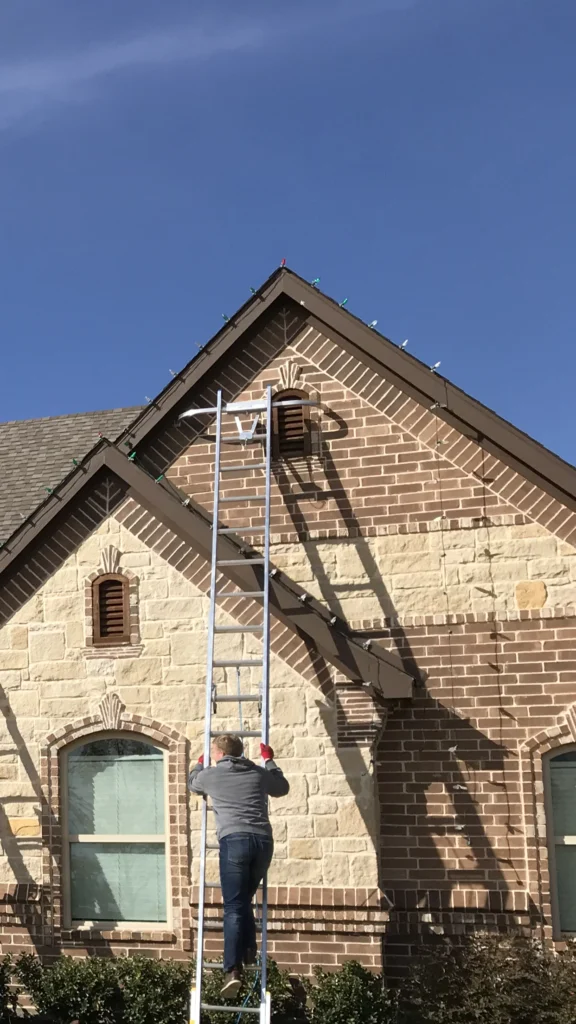
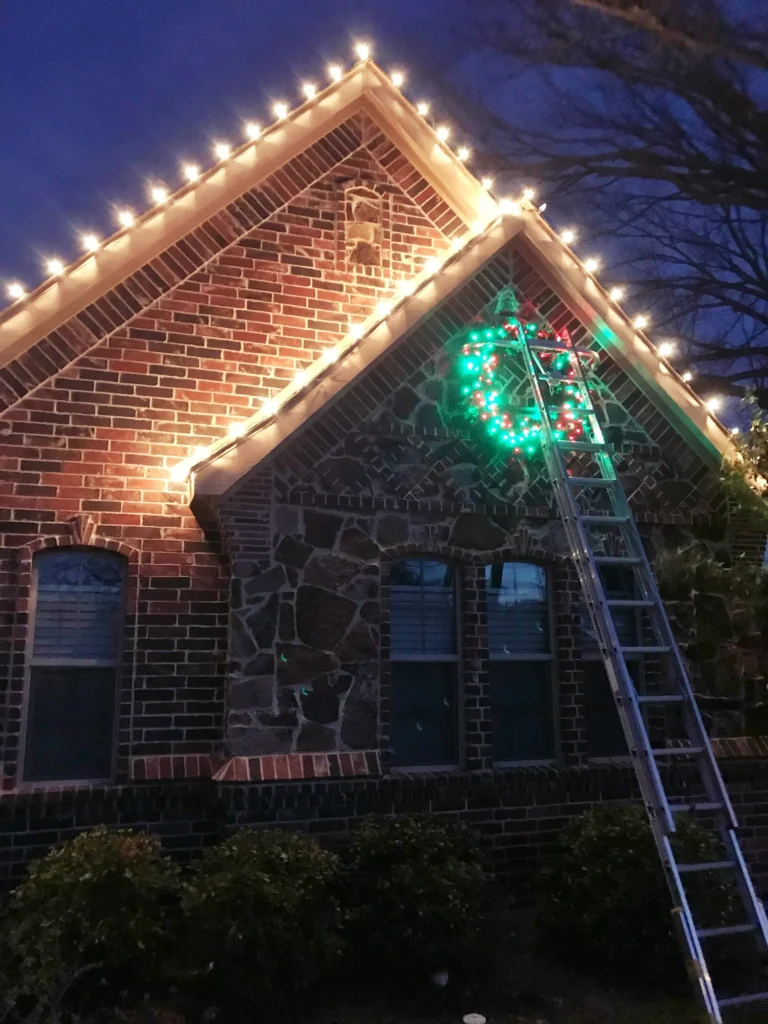
An extension ladder is an obvious must for any Christmas light installer, but the ladder by itself is only half the setup. Two accessories are worth adding: a ladder standoff and leg levelers.
Installers almost never get a perfect ladder spot. Through the day you will run into landscaping, slopes, sidewalks, driveways, flower beds, elevation changes and every kind of architectural detail.
Leg levelers give you a built-in way to handle certain uneven surfaces within the ladder’s specifications. A compatible standoff changes how the ladder contacts or stands away from the structure in the right applications, which helps around gutters and trim.
Add a multi-position ladder

Keep a multi-position or telescoping ladder on the truck too. Plenty of tasks do not justify dragging out the biggest extension ladder, and a smaller, adjustable ladder moves around a property much faster.
The key is having several access options instead of forcing one ladder to handle everything. Always use ladders and accessories according to the manufacturer’s instructions, duty ratings and applicable workplace safety rules.
Extension ladders →Ladder standoffs →Leg levelers →Multi-position ladders →
4. Crescent snips / wire cutters
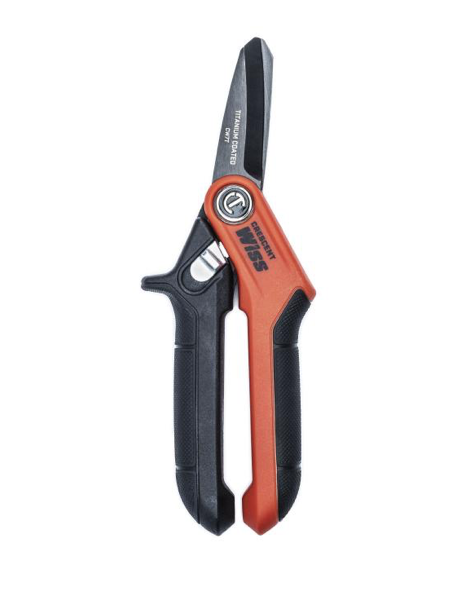
Nothing flashy here, just a tool a crew uses all day long. Anyone building custom runs needs a good pair of wire cutters or snips.
Crescent’s titanium-coated tradesman snips are a favorite with pro crews: comfortable in the hand, precise, and they hold an edge. Some installers have even snipped through pennies with them just to see if they could. Nobody needs to cut up their spare change, but it shows how tough they are.
Why good cutters matter
Count the cuts in a full season: socket wire, extension wire, custom runs, small adjustments. A cheap or dull cutter only costs a few seconds per cut, but professional Christmas light installation repeats the same motions thousands of times. A sharp, comfortable hand tool pays for itself.
5. RYOBI 150-watt 18V portable power source
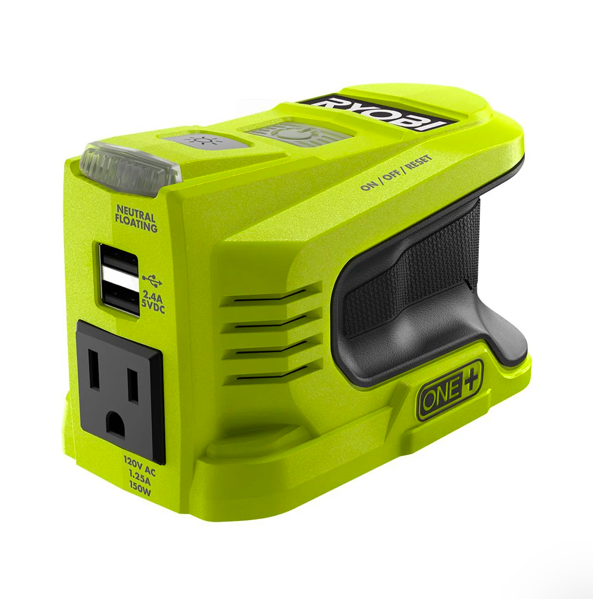
This small tool solves a surprising number of problems. The RYOBI 150W power source runs on the RYOBI 18V battery system and provides portable power, including a 120V AC outlet.
The biggest win is testing light strands without hunting for an outlet and running a cord just to check a run. Pop in an 18V battery, carry the unit to where you are working, and test compatible lighting within its rated limits.
It also charges phones and other devices on long install days. In peak season a phone is running nonstop for customers, scheduling, photos, navigation, designs and crew communication, so that matters more than you might think.
The rest of the professional Christmas light installer tool list
Those five tools are the productivity picks, but a complete professional setup takes a lot more. Here is the rest of the gear worth considering.
Safety and roof access equipment
Roof access is never one-size-fits-all. The right equipment depends on the property, pitch, roofing material, weather, the work being done and the safety rules that apply.
Beyond boots, roof hooks, pitch hoppers and ladders, professional contractors should evaluate the fall protection, anchors, harnesses, ropes, PPE and access equipment that fit their work. A tool that works on one roof does not automatically make the next roof safe to access.
Many successful installers started with nothing but a ladder. When a difficult job came along, they priced it correctly and bought the harnesses, ropes and climbing gear needed to do it right instead of passing on it. Speed matters, but no job is worth an avoidable serious injury.
Electrical testing and troubleshooting tools
Every pro installer needs a way to track down electrical problems. At minimum, keep these three testers on the truck:
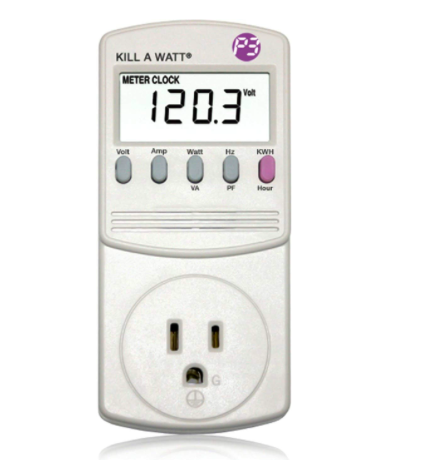

- Kill A Watt meter. A plug-in meter like the Kill A Watt shows what your lighting setup is actually drawing, within the meter’s limits, so you are not guessing at power use on big jobs.
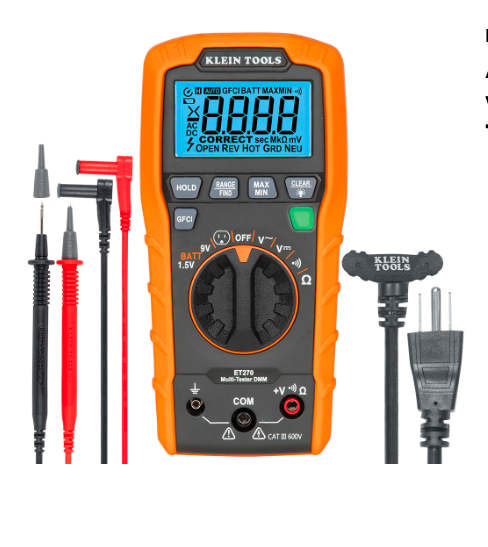
- Multimeter. A quality multimeter adds voltage and resistance readings and, with the right setup, other measurements for deeper troubleshooting.
- Non-contact voltage tester. Small enough to keep in a pocket for quick checks for the presence of voltage. It does not replace every kind of electrical verification, but it is convenient.
Use electrical test equipment only for work you are trained and qualified to do. The right tester turns a frustrating dead section into a problem you can isolate quickly. More help: Christmas lights not working: common problems and how many Christmas lights per outlet.
Kill A Watt →Klein multimeter →Klein voltage tester →
Christmas light installation materials and supplies

Tools do not help much if the crew runs out of material halfway through a house. A professional inventory usually includes:
- C9 LED bulbs
- SPT-1 socket wire
- SPT-1 extension wire
- Male plugs
- Female plugs
- All-in-one connectors
- Christmas light clips
- Ridge clips
- Magnetic clips and mounts where appropriate
- Replacement sockets
- Zip ties, binder clips and stainless or coated cable
- Timers
The real secret is not just buying materials. It is standardization. When every crew uses the same bulbs, wire, connectors and mounting systems, inventory is easier to track and installers get faster because every component is familiar.
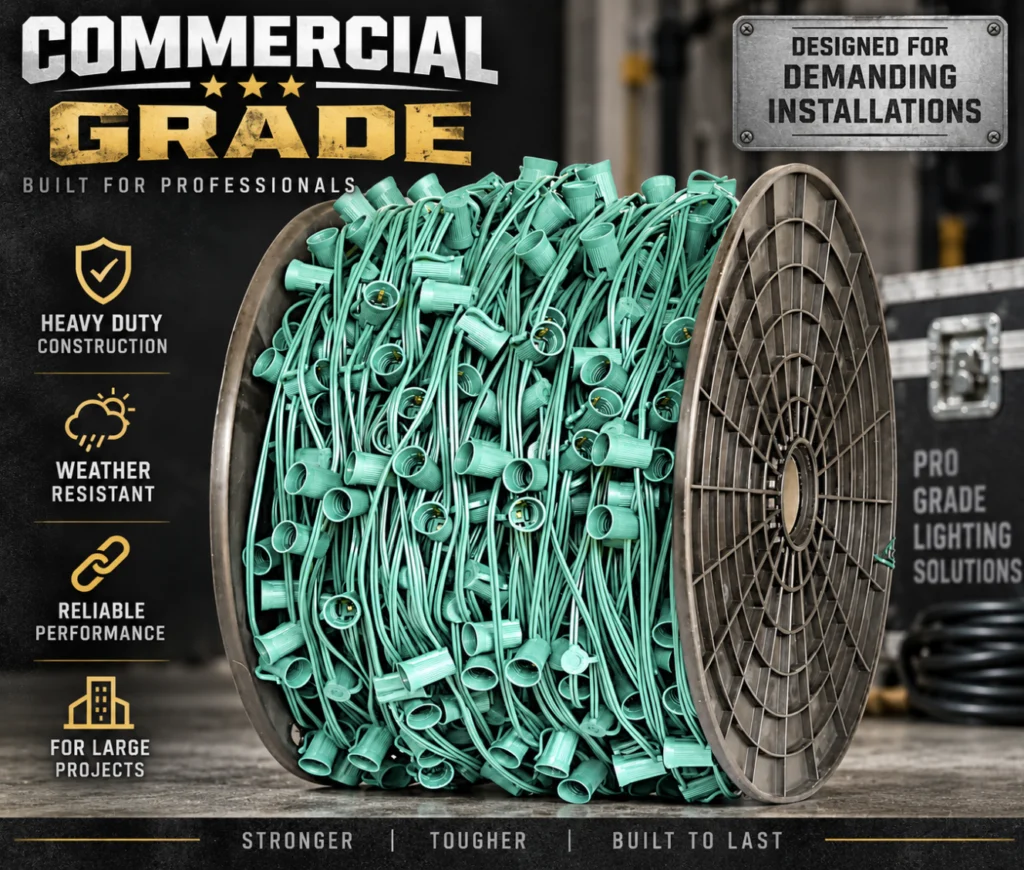

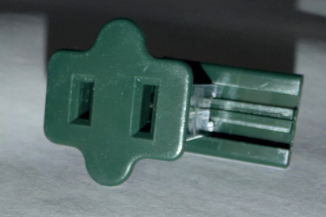
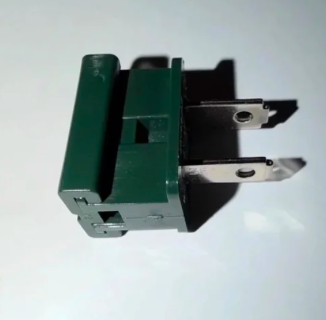


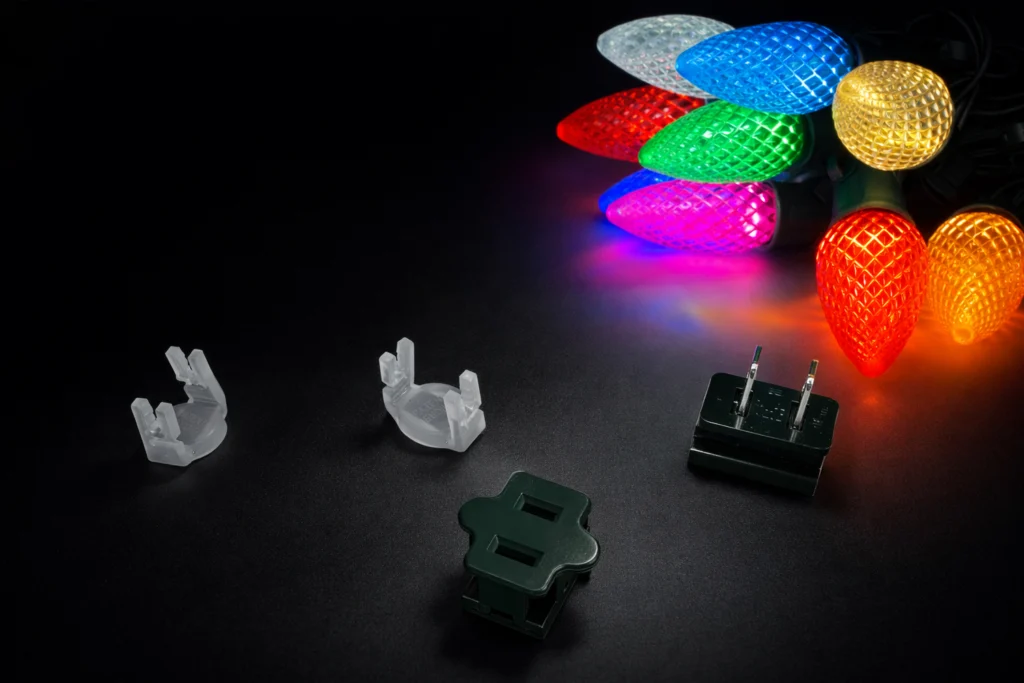
Learn more in the C9 socket wire buying guide, the plugs and extension wire guide and the Christmas light clips guide.
Shop professional Christmas light supplies at wholesale prices
Tool vest or bird-hunting belt
One of the easiest ways to speed up an install is to stop walking back for supplies. A vest with lots of pockets, or a bird-hunting belt with several big pouches, lets an installer carry the lightweight items they are using over and over for that part of the job.
Clips in one pocket, bulbs in another, connectors and small tools in a third. You do not need the whole truck strapped to your waist, just enough to keep working without stopping. Whatever you carry must not get in the way of safe climbing, ladder use, fall protection or movement.
Clear storage containers and stackable toolboxes
Organization gets more important every season your business grows. Stackable toolbox systems such as HART’s, paired with clear storage bins, work well. 27-gallon clear totes are popular because you can see what is inside without opening every box, and smaller clear containers with colored lids are great for day-to-day parts.
In peak season a truck can hold thousands of bulbs, clips, plugs, connectors, tools, batteries, extension cords and spare parts. Give everything a dedicated, labeled spot. The goal is for any trained crew member to open the truck or trailer and know exactly where everything is, instead of spending five minutes digging for the parts to build a custom extension cord.
Keep clear trash bags on every job, too. Packaging, wire scraps, zip-tie tails and broken parts should never be left behind on a customer’s property.
1,000-foot wire spool holder or dispenser
If you buy professional socket wire or extension wire in bulk, a holder that can carry a 1,000-foot spool is worth it. One simple trick: a 10 x 10 inch tamper tool works as a handle you can slide the spool straight onto.
For extension wire, a 5-gallon bucket with holes drilled in the side and bottom makes a fast dispenser. Crews can pull 100 feet of wire quickly and cut custom cord lengths on large commercial jobs with no tangles. It is a cheap upgrade that saves small amounts of time again and again, and that is what productivity really is.
Vehicle and equipment organization
Your truck or trailer should work like a mobile warehouse. The most-used materials go closest to the door, and the rarely used equipment goes farther back. Bulbs, clips, plugs, testers, charged batteries and trash should each have a set location.
With multiple crews, use the same layout in every vehicle so employees are not learning a new system each time they switch trucks. The fewer times someone asks “Where is the ___?”, the better your system is working. See how organized crews run the day in install-day operations.
Cold and bad-weather gear
Christmas light installation means working outside during a season when conditions change fast. Depending on your area, pack:
- Work gloves
- Warm layers
- Rain gear
- Extra socks
- Proper footwear
- Headlamps
- Hand warmers
- Weather-appropriate PPE
This is not only about comfort. Cold hands slow detailed work, poor visibility makes jobs harder, wet conditions add hazards, and fatigue causes mistakes. Know when conditions call for different equipment and when they mean the work should wait.
Business and job-management software
The work does not stop when the lights turn on. You still have leads, customer details, quotes, scheduling, service calls, invoices, payments and next year’s rebookings to manage.
Many installers pair a Christmas light estimator with a field-service platform like Jobber. They handle different jobs: the estimator covers the Christmas-light-specific side (designing the display, measuring the roofline, calculating materials, pricing and building the estimate), while the field-service software handles broader business management.
A streamlined workflow looks like this:
Lead → house photo → light design → roofline measurement → material count → estimate → customer approval → scheduling → install → invoice → rebooking
When you are running a lot of installs in a short season, that information should not be scattered across texts, scraps of paper, photos, spreadsheets and memory.
Christmas Light Estimator →Jobber →
Marketing and sales tools
Some of the most valuable tools on the truck are not installation tools at all. Your phone is one of them:
- Photograph every finished install
- Take before-and-after shots
- Document unusual designs
- Build a portfolio
- Ask happy customers for reviews
Good photos keep selling jobs for years after the original install. Design software becomes a sales tool here too. Instead of only showing photos of someone else’s house, you can draw a proposed design on the customer’s own roofline and add wreaths, garland and bows as upsells. The conversation shifts from “Imagine warm white C9s along this roofline” to “Here is exactly what we are proposing. Put down a deposit today to lock in a spot on our schedule.” More ideas: Christmas light upsells.
Yard signs, QR codes, business cards, social media, a Google Business Profile, a professional website and an organized portfolio all belong in the marketing kit. You can also list your company free on ChristmasPlug so homeowners searching for installers can find you.
The small stuff that saves the day
Plenty of little things do not deserve their own section but rescue a job when you need them: spare batteries, charging cables, Sharpies, replacement parts, water, a basic first-aid kit, flashlights or headlamps and other everyday essentials. You will build your own list from the problems you run into. When something small costs you 30 minutes because nobody packed it, add it to the permanent truck inventory. That is how a good system develops.
How to make a Christmas light installation business more productive
The biggest productivity lesson is not “work faster.” Rushing leads to mistakes and accidents. The real goal is to eliminate wasted movement and unnecessary decisions. Waste eats profit the same way debt eats margins.
Picture a typical install:
- Twenty unnecessary walks back to the truck is wasted labor.
- Fighting tangled bulk wire is wasted labor.
- Showing up without knowing roughly how much material the house needs is wasted time.
- Clips buried under five other bins is wasted time.
- Hunting for an outlet and running a cord every time you test is wasted time.
- Measuring, calculating, drawing and pricing by hand when software could do it beforehand is wasted time.
Saving 30 seconds does not sound like much. Neither does two minutes. Multiply those small gains across every installer, every house, every day of the season, and that is where productivity turns into money.
Recap: the top 5 Christmas light installer productivity tools
- Cougar Paws + GOAT roof hook: specialized roof traction and access.
- Christmas light design and estimating software: design, measure, count materials and quote before install day.
- Extension ladder + standoff + leg levelers: a more flexible ladder setup for every kind of property.
- Crescent snips / wire cutters: because pros make an enormous number of cuts each season.
- RYOBI 150W 18V power source: portable strand testing and device charging.
None of these replace training or good judgment. They simply remove friction from the work.
Build your professional Christmas light installation setup
If you are starting or growing a Christmas light company, you do not need to buy everything at once. Build your equipment around the work you actually do: buy tools that solve recurring problems, organize the truck so materials are easy to find, standardize the supplies your crews use, keep testing equipment handy, and plan as much of each install as possible before install day.
Just getting started? Check the Christmas light contractor starter kit, the installer tool kit by stage and the full professional Christmas light installation guide.
Shop professional Christmas light supplies
Try the Christmas Light Estimator free
Christmas light installer tools FAQ
What tools do you need to install Christmas lights professionally?
At minimum: extension and multi-position ladders with levelers and a standoff, roof traction boots and roof access equipment, fall protection suited to the job, good wire cutters, a portable power source or outlet tester, a Kill A Watt meter, a multimeter, a non-contact voltage tester, plus standardized materials like C9 bulbs, SPT-1 socket wire, plugs, connectors and clips.
What is the most important productivity tool for a Christmas light installer?
For most crews, Christmas light design and estimating software saves the most time because it lets you measure, count materials, price and show a mockup before anyone drives to the job. On the install itself, good roof access equipment and an organized truck save the most time.
What shoes do Christmas light installers wear on roofs?
Many pros wear roofing boots with replaceable traction pads, such as Cougar Paws, on suitable shingle and metal roofs. No footwear makes every roof safe, so pitch, material, weather and fall protection still matter.
How do you test Christmas lights without an outlet?
A battery-powered portable power source with a 120V AC outlet, such as the RYOBI 150W 18V unit, lets you test compatible light strands anywhere on the property within its rated limits.
What size ladder do I need for Christmas light installation?
Most crews carry extension ladders in the 24 to 32 foot range for two-story homes, plus a multi-position or telescoping ladder for entries, arches and single-story work. Add leg levelers and a standoff, and always follow the ladder's ratings.
How do Christmas light installers stay organized?
They standardize materials across crews, store parts in labeled clear bins and stackable toolboxes, set the same layout in every truck, use spool dispensers for bulk wire, and carry frequently used parts in a vest or belt.
What software do Christmas light installers use?
Many use a Christmas-light-specific estimator for measuring, designing, material counts and quotes, paired with a field-service platform like Jobber for scheduling, invoicing and payments.

Author: ChristmasPlug Team
The ChristmasPlug team: Christmas light installers with nine years in the trade.